Kitchen Fire Cleanup: Removing Smoke and Soot the Right Way
Even a small, quickly extinguished kitchen fire can leave soot and odor throughout your home. Here's why grease-fire residue is so stubborn and how professional cleanup actually removes it.
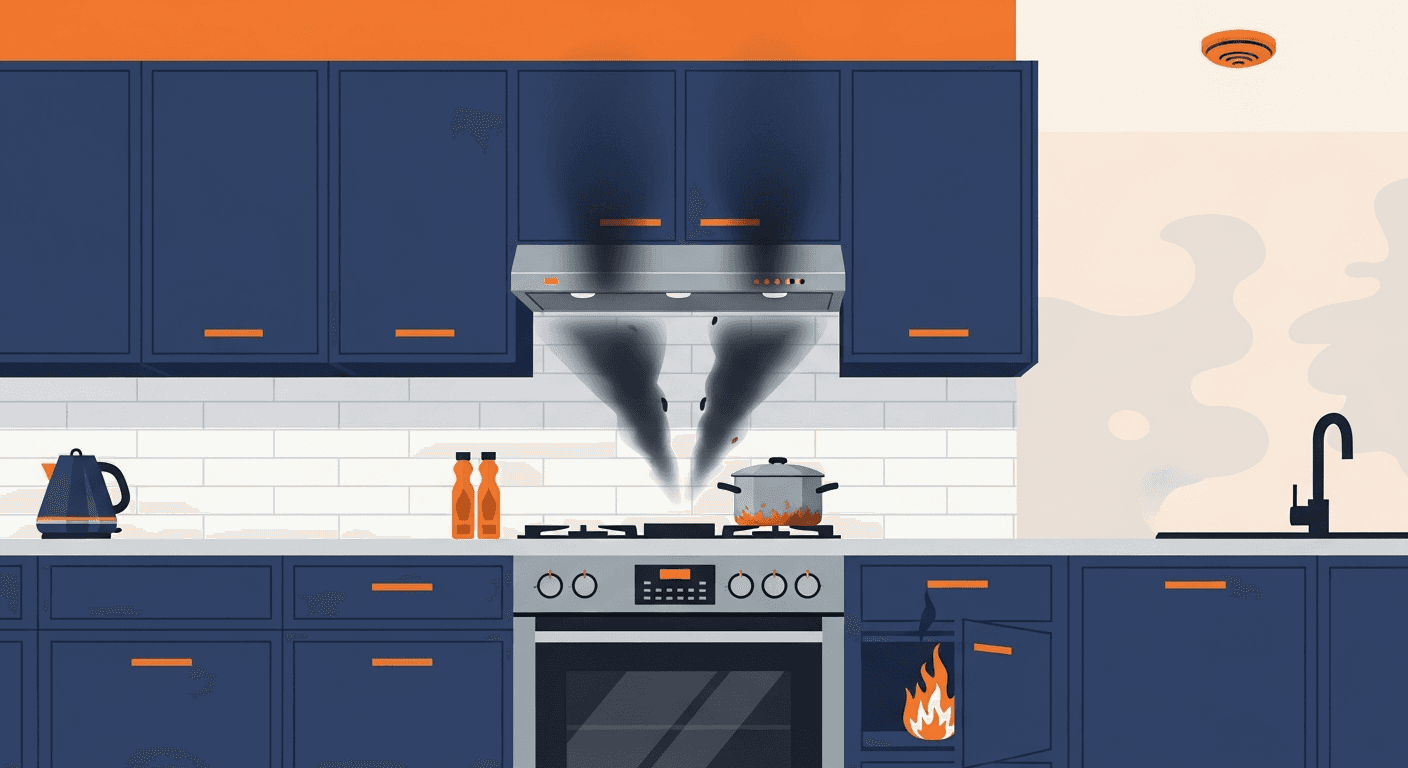
A “Small” Kitchen Fire Is Rarely a Small Cleanup
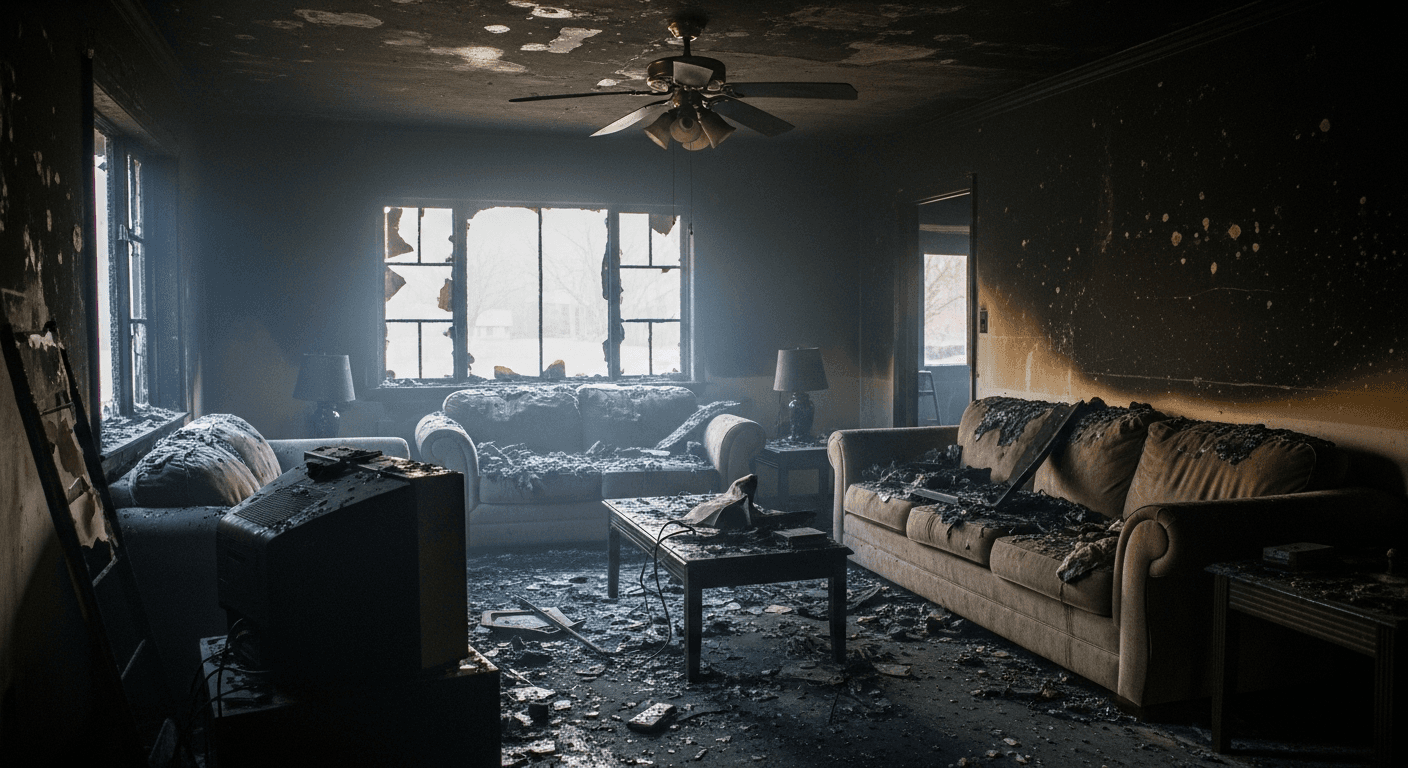
Kitchen fires are the most common type of house fire, and most are extinguished within minutes — a pan flares up, the homeowner smothers it, and the visible flames are gone. The relief is real, but the cleanup that follows often surprises people. Even a brief grease fire can push greasy soot and odor far beyond the stove, into cabinets, adjacent rooms, and the HVAC system. Understanding why helps explain why proper cleanup is worth doing right.
Why Grease-Fire Soot Is So Stubborn
Not all soot is the same. Cooking-oil and grease fires produce what restorers call a protein residue — a thin, greasy, often nearly invisible film that carries a strong, persistent odor and bonds tightly to surfaces. Unlike the dry, powdery soot from burning paper or wood, protein residue smears when wiped and resists ordinary household cleaners. Worse, it's mildly acidic, so left in place it can discolor paint, etch finishes, and corrode metal fixtures and appliances over time.
This is why scrubbing the stovetop and calling it done usually isn't enough. The film spreads with the smoke, settling on walls, ceilings, cabinet interiors, and countertops well away from where the fire started. For a deeper look at residue types, see our guide on the types of soot and smoke damage.
Step 1: Ventilate and Avoid Spreading the Residue
Once the fire is fully out and the area is safe, open windows and doors to ventilate. Resist the urge to immediately wipe sooty walls with a wet cloth — water and pressure can drive greasy residue deeper into porous surfaces and smear it across clean areas. Turn off your HVAC system so it doesn't circulate soot and odor through ductwork to the rest of the house.
Step 2: Protect Food and Vulnerable Items
Discard any open food, and inspect packaged or canned goods stored near the fire — smoke can penetrate packaging. Move undamaged valuables, fabrics, and electronics out of the affected area before residue settles further. Soft materials like curtains and upholstery absorb odor quickly and are often the reason a kitchen smells smoky long after the surfaces look clean.
Step 3: Professional Cleaning That Actually Works
Professional fire and smoke damage restoration addresses kitchen-fire residue with methods matched to each surface and soot type:
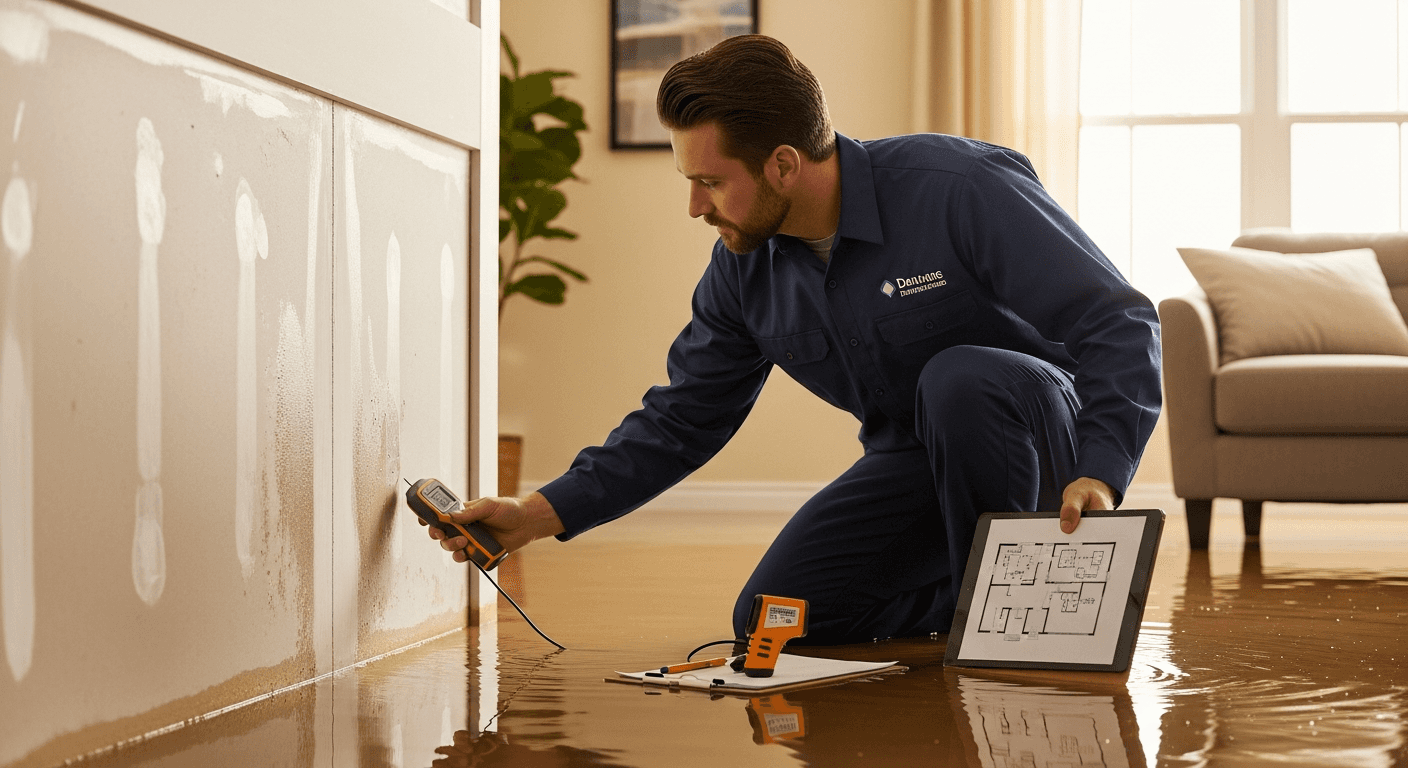
- Assessment: identifying how far soot and odor traveled, including inside cabinets and ductwork
- Specialized cleaning agents formulated to break down greasy protein residue rather than smear it
- Surface-by-surface treatment of walls, ceilings, cabinetry, and countertops, with care to avoid damaging finishes
- Content cleaning of salvageable cookware, dishes, and belongings affected by smoke
- HVAC and duct cleaning so the system stops recirculating odor
Step 4: Removing the Smoke Odor for Good
The hardest part of any kitchen fire is the lingering smell, because odor molecules embed in porous materials. Masking it with air fresheners only hides the problem temporarily. Professional deodorization works at the source — combining thorough residue removal with technologies such as thermal fogging, hydroxyl or ozone treatment, and air scrubbing with HEPA and activated-carbon filtration — to neutralize odor rather than cover it. Done correctly, the goal is to remove the smell, not chase it from room to room.
When to Call a Professional
For a tiny, fully contained flare-up with no spread, a careful homeowner cleanup may be enough. But consider professional help when you notice any of the following:
- Soot or a greasy film on walls, ceilings, or cabinets beyond the immediate stove area
- A smoky odor that lingers after surface cleaning or returns when the heat or A/C runs
- Discoloration on painted surfaces, fixtures, or appliances
- Any uncertainty about whether smoke reached the ductwork or adjacent rooms
What Can Usually Be Saved — and What Can't
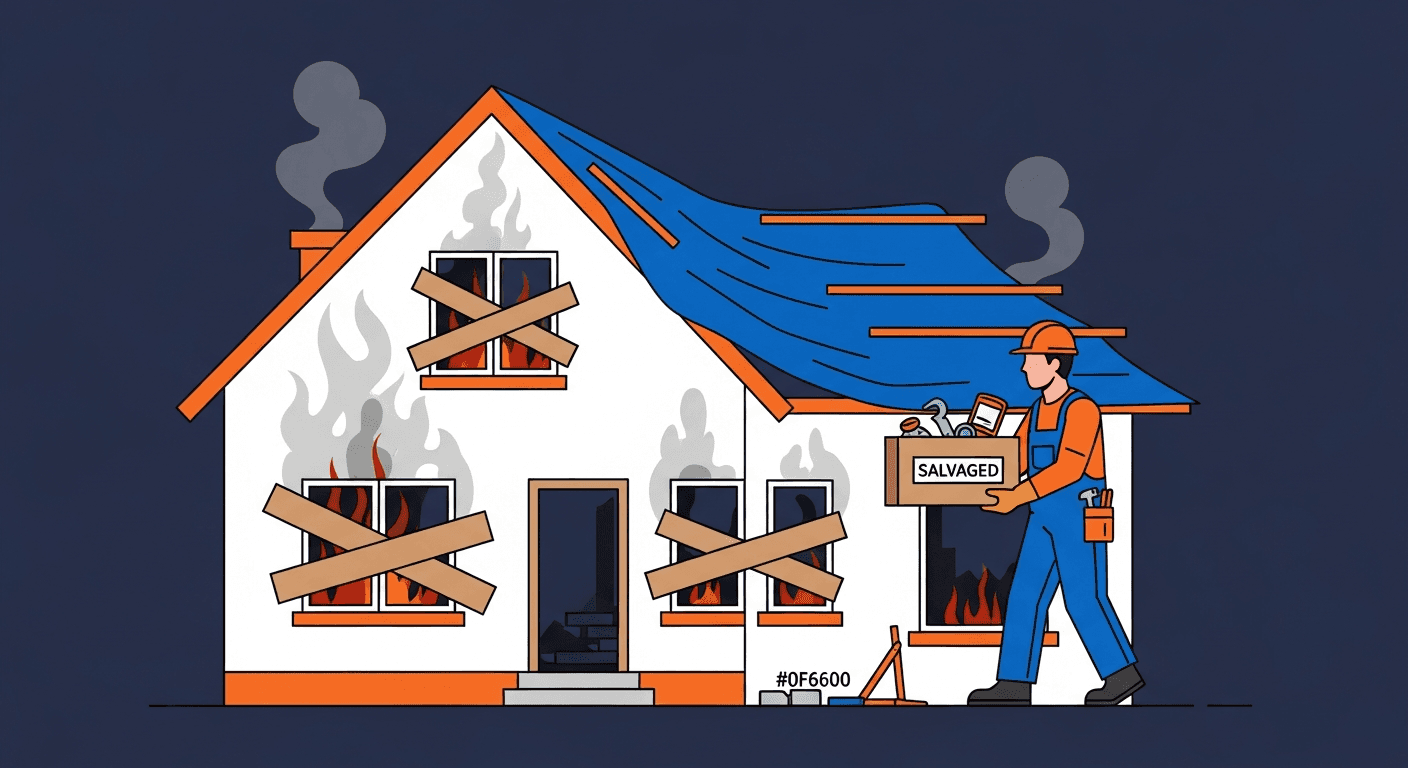
One of the hardest parts of a kitchen fire is deciding what stays and what goes. Hard, non-porous items — ceramic dishware, glass, metal cookware, and sealed surfaces — can often be cleaned and saved with the right products and process. Porous belongings are trickier: wooden cutting boards, plastic storage containers, and small appliances may absorb odor and residue that's difficult to remove safely, especially anything that contacts food. Soft goods such as curtains, dish towels, and upholstered seating frequently need specialized laundering or, in some cases, replacement. A professional content-cleaning assessment sorts items into salvageable, restorable, and non-salvageable categories — which not only saves what can be saved but also gives you a documented list to support your insurance claim.
Don't Forget the Insurance Claim
Document the damage with photos and video before cleanup, keep damaged items until they're recorded, and save receipts for any out-of-pocket costs. Most homeowners policies cover sudden kitchen fires, including smoke and soot cleanup. Our team documents the loss in detail, to insurance standards, for your claim file — your insurer determines coverage.
Bulldog Cleaning & Restoration provides 24/7 fire and smoke cleanup across Philadelphia, Bucks, Montgomery, Chester, and Delaware counties and South Jersey. After a kitchen fire, call (267) 982-5504 or visit our contact page.