Sewage Damage Cleanup Philadelphia
Category 3 black water sewage backup cleanup. Safe containment, decontamination, and certified disposal. IICRC Certified technicians available 24/7.
Immediate Health Warning
Sewage backup contains dangerous pathogens including E. coli, hepatitis A, salmonella, norovirus, and rotavirus. Do NOT enter the affected area without full PPE. Do NOT attempt to clean up sewage without proper training and protective gear. Call us immediately — we respond 24/7.
What Is Category 3 "Black Water" Contamination?
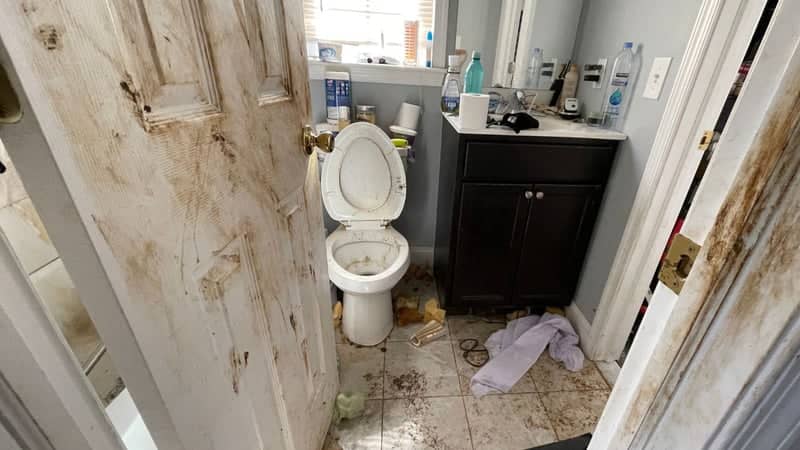
The IICRC Standard S500 classifies water damage into three categories based on contamination level. Category 3 — commonly called "black water" — is the highest hazard classification and includes sewage backup, flooding from rivers or streams, toilet overflow with feces, and water that has touched Category 3 materials. All sewage backup is automatically classified as Category 3 regardless of its visual appearance.
Category 3 water contains gross contamination from pathogenic agents including bacteria, fungi, parasites, and enteric viruses. Even small amounts — splashed droplets from stepping into a sewage-flooded basement — can cause serious illness. Contact with eyes, mouth, or open wounds is particularly dangerous. This is why sewage cleanup is always a job for certified professionals with full hazmat protocols.
Our technicians arrive in full Tyvek suits, chemical-resistant gloves, N95 or P100 respirators, and eye protection. We establish containment barriers to prevent cross-contamination to unaffected areas of your home or business before any extraction work begins.
Common Causes of Sewage Backup
Health Hazards Involved
The pathogens found in sewage backup can cause gastrointestinal illness, respiratory infections, and in vulnerable populations, life-threatening disease. The primary categories of risk include:
Our Sewage Cleanup Process
Emergency Dispatch
24/7 response. We arrive in full PPE with extraction equipment and containment supplies. Our crew chief documents the loss to insurance-industry standards before work begins.
Containment Setup
Plastic sheeting barriers isolate the contaminated zone. Negative air pressure machines with HEPA filtration prevent cross-contamination of clean areas.
Category 3 Extraction
Sewage and contaminated water is extracted using specialized equipment and disposed of per EPA and local municipal codes — never simply pumped to a drain.
Removal of Unsalvageable Materials
Porous materials — drywall, insulation, carpet, padding, contaminated wood — are removed, bagged, and disposed of per biohazard protocols.
EPA-Approved Antimicrobial Treatment
All affected surfaces are treated with EPA-registered hospital-grade antimicrobials. Multiple applications ensure complete pathogen neutralization.
Structural Drying & Clearance
Industrial drying equipment removes residual moisture. Final testing confirms contaminant levels have returned to normal before we demobilize.
What NOT To Do After Sewage Backup
In the panic of a sewage backup, many homeowners take actions that worsen the situation, increase health risks, or complicate their insurance claim. Avoid these common mistakes:
Insurance Coverage for Sewage Backup
Most standard homeowner's insurance policies do not automatically cover sewage backup damage. Coverage typically requires a separate sewage backup or water backup endorsement (rider) added to your policy.
Here's how coverage typically breaks down:
Covers backup from your own home's drain or sewer line — typically $5,000-$10,000 of coverage.
May cover sewage backup caused by a named peril (e.g., storm). Review your policy language carefully.
Covers sewer backup directly caused by flood conditions. Requires separate NFIP or private flood policy.
If municipal sewer overflow caused the backup, your municipality may bear partial liability. We document everything to insurance-industry standards for your claim file.
For related water damage issues, see our flood damage restoration and water damage restoration pages.
What To Do First After a Sewage Backup — and How We Document It
Do This First
Documentation for Your Claim
Water Removal & Contaminated Bulk Material Removal
Category 3 water and any sludge or solids are extracted with specialized equipment and disposed of in accordance with EPA and local municipal codes — never simply pushed down a household drain. Once the liquid is gone, the contaminated bulk material has to come out too. This is the muck-out phase, and with sewage it is as much about biohazard safety as it is about drying.
What Gets Removed
Why It Can't Be Skipped
You can't disinfect what you can't reach. Porous materials that soaked up Category 3 water cannot be reliably decontaminated and will lock in pathogens and odor if left in place. Removing them is what makes the antimicrobial treatment, drying, and mold prevention that follow effective rather than cosmetic.
Odor Treatment & Deodorization
With sewage, odor is a signal — not just an inconvenience. A lingering smell usually means contamination or moisture is still present somewhere. That's why deodorization comes after removal and decontamination, never instead of it.
After unsalvageable materials are removed and surfaces are treated with EPA-registered, hospital-grade antimicrobials, we deodorize with HEPA and activated-carbon air scrubbing, hydroxyl or ozone treatment, and fogging where appropriate to neutralize odor at the molecular level. If any smell remains afterward, we treat it as a flag to re-check for missed contamination or incomplete drying — both of which our verification step is built to catch.
Post-Remediation Verification & ATP Testing
Before we consider a sewage job finished, we verify the result — and not just by eye. Visual inspection alone can't confirm that a surface is free of the bacteria and organic residue sewage leaves behind.
ATP (adenosine triphosphate) testing swabs a cleaned surface and measures the biological residue on it with a handheld luminometer in seconds. A low reading indicates the surface has been cleaned to an objective, measurable standard. Paired with moisture verification and our decontamination protocols, ATP testing helps document that the space has been thoroughly remediated before any reconstruction begins.
One Company From Extraction to Final Rebuild
A sewage loss isn't over when the contamination is gone — walls, flooring, and fixtures still have to be rebuilt. Using one company for both decontamination and reconstruction means a single accountable team, one documented claim file, and no gap between the crew that tears out the damage and the crew that rebuilds it.
Mitigation & Cleanup
Water extraction, bulk soil and muck-out removal, and removal of unsalvageable materials to stop the damage from spreading.
Drying, Decontamination & Verification
Structural drying, antimicrobial treatment, odor neutralization, and documented moisture and ATP verification.
Reconstruction & Rebuild
Drywall, flooring, paint, and full buildback that returns your property to pre-loss condition.
When one team owns the entire job, you get a single point of contact, one documented insurance file, and no gap where work — or accountability — falls between a cleanup vendor and a separate contractor. It is faster, cleaner, and far easier on you. Learn more about our reconstruction services.
Transparent Pricing & Claims Process
Restoration is stressful enough without billing surprises. It's the same Integrity we bring to every job: transparent pricing, honest assessments, and a clear claims process — no surprises. You understand the scope and approve it before we proceed.
Technology & Your Client Portal
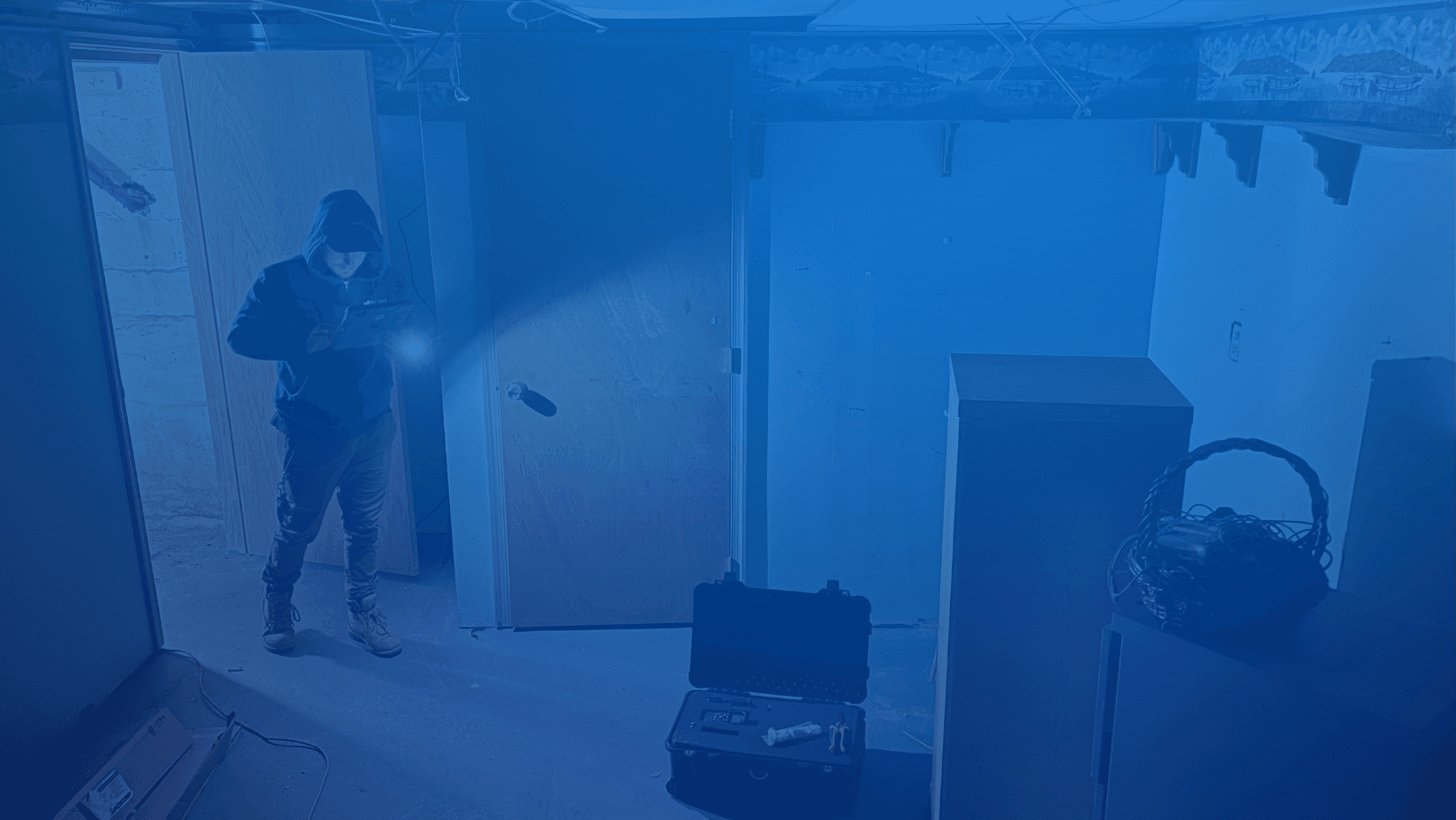
We pair certified technicians with the equipment and software that make restoration measurable — so decisions are based on data, not guesswork.
Questions about coverage or process? Contact our team or call (267) 982-5504.
Related Services
Water Damage Restoration
Full water damage cleanup and drying services.
Flood Damage Restoration
Emergency cleanup for storm and river flooding.
Mold Remediation
Mold removal before, during, and after sewage events.
Storm Damage Restoration
Board-up, tarping, and cleanup after severe storms.
Commercial Restoration
Sewage and water damage cleanup for businesses.
Water Damage — Bensalem PA
Emergency water and sewage response in Bensalem.
Basement Flooding After Heavy Rain: Why It Happens and How to Recover
What causes basements to flood in heavy rain — and how to dry out and prevent it.
Sewage Cleanup FAQs
Sewage Backup? Call Immediately.
Don't delay — sewage contamination worsens rapidly. Our IICRC certified team handles all Category 3 black water cleanup safely.
Average response time: 47 minutes • Available 24/7/365