After the Fire: Securing Your Property, Salvaging Contents, and Restoring to Pre-Loss Condition
What happens in the days after a fire decides how much you recover. Here's how an experienced restorer secures the property, salvages contents, and restores to pre-loss condition — plus three common complications and how they're overcome.
The Hours After a Fire Decide How Much You Recover
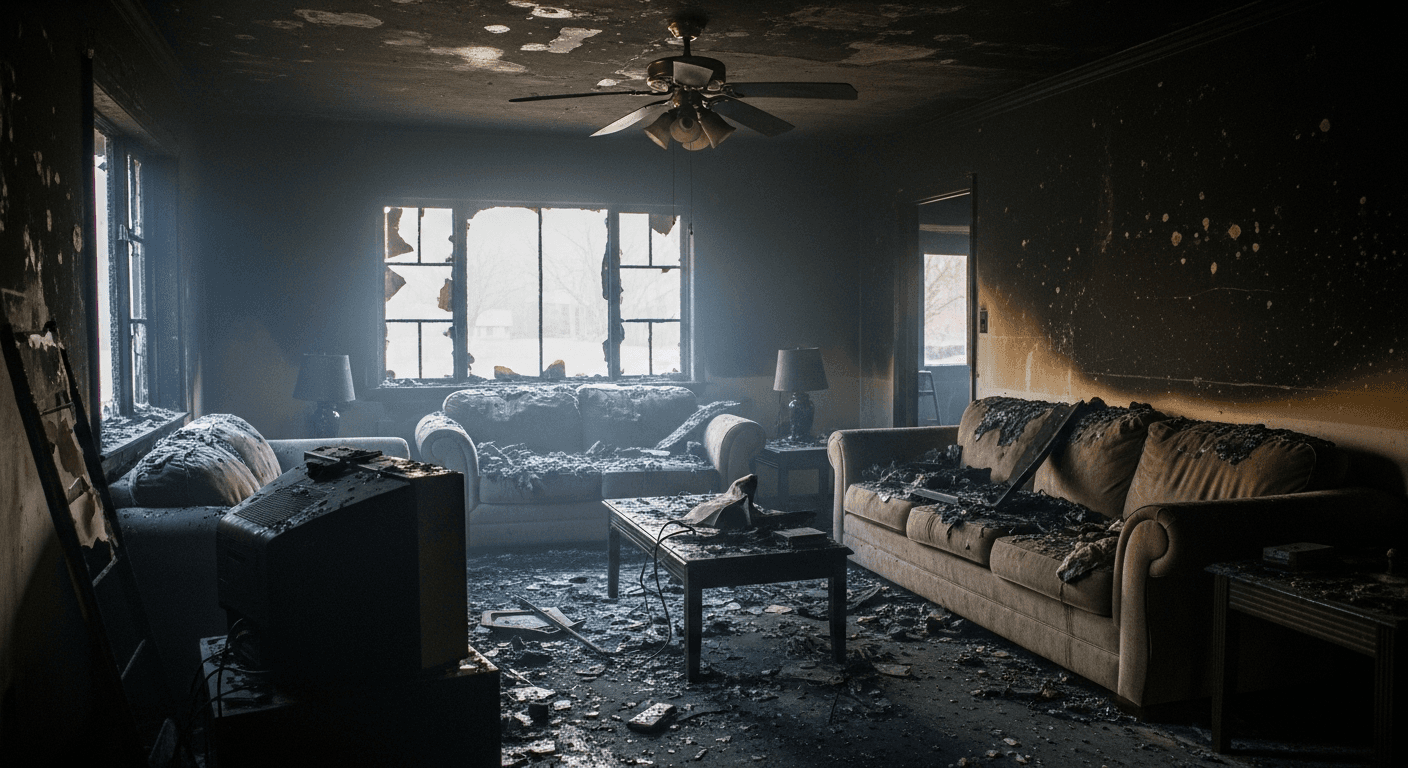
Once the flames are out and the fire department leaves, the property is rarely safe or stable. Soot continues to do damage, moisture from firefighting lingers, and an unsecured building is exposed to weather, theft, and further loss. What happens in the first days after a fire has an enormous influence on how much of your structure and belongings can ultimately be saved. Here's how an experienced restoration team approaches it.
Step One: Secure the Property
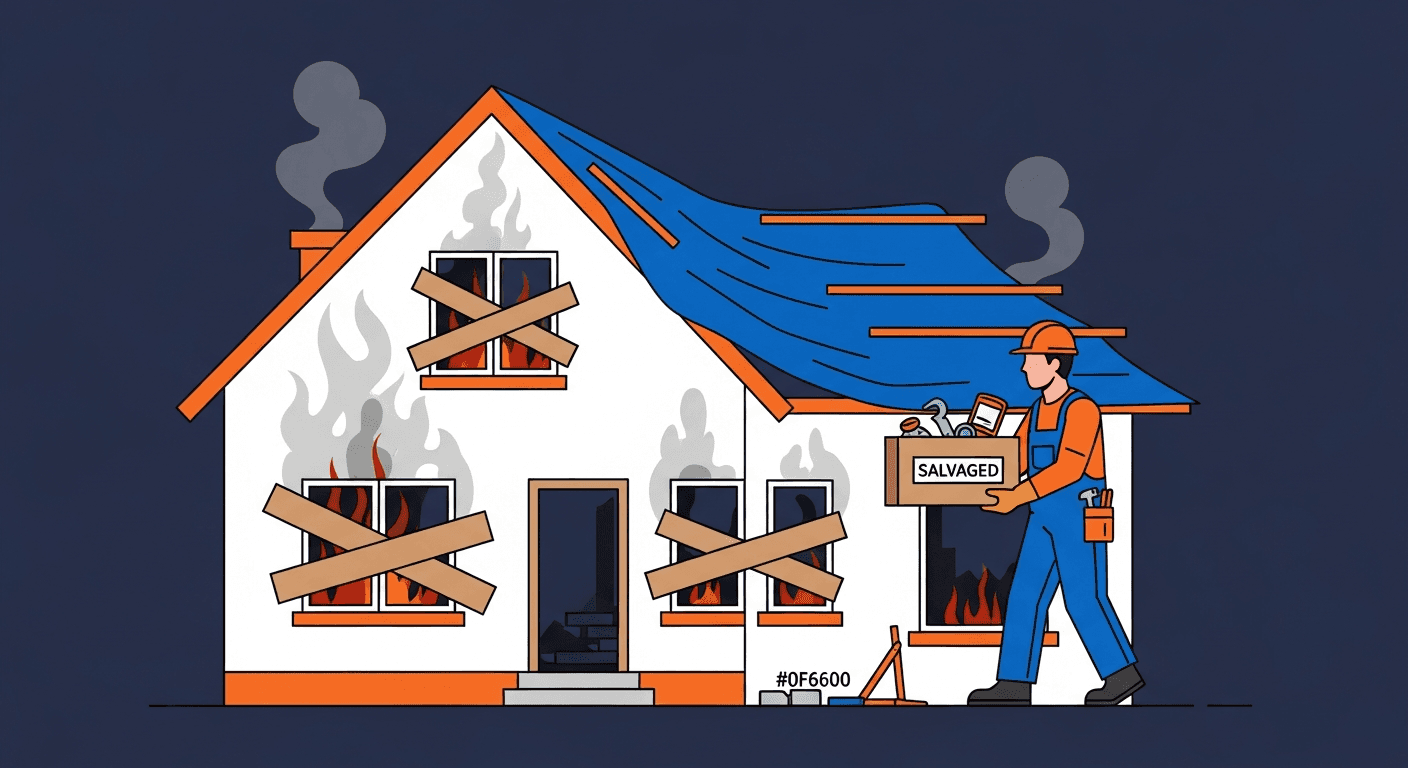
Before any cleaning or rebuilding, the property has to be stabilized and protected from additional damage. Fire and the effort to extinguish it often leave broken windows, open walls, and compromised roofs that let in rain, wind, and intruders. Securing the site typically includes:
- Board-up of broken windows, doors, and wall openings
- Roof tarping to keep weather out of the structure
- Temporary fencing where needed to control access and reduce liability
This step protects you both physically and financially — most insurance policies expect the owner to take reasonable steps to prevent further loss. Our emergency board-up and tarping services exist for exactly this moment.
Step Two: Salvage and Protect Your Contents
Your belongings are often the most emotionally important part of a loss, and far more can be saved than people expect. An experienced restorer will inventory and, where appropriate, pack out contents to a controlled environment for cleaning and storage while the structure is being restored. Specialized processes can recover a surprising range of items:
- Hard goods cleaned of soot and residue using the right method for each material
- Textiles, clothing, and soft items treated with specialized cleaning
- Odor addressed with technologies such as hydroxyl or ozone in controlled conditions
- Documents and electronics evaluated for specialized restoration rather than automatic replacement
Careful contents handling also creates a documented inventory that supports your insurance claim.
Step Three: Restore to Pre-Loss Condition
The goal of restoration is to return your property to its pre-loss condition — the way it was before the fire. That means cleaning soot and smoke residue from surfaces and cavities, fully deodorizing the structure, and then rebuilding what can't be saved. Because restoration and reconstruction can be handled by one team, the transition from cleanup to rebuild stays coordinated and accountable.
Three Common Complications — and How an Experienced Restorer Overcomes Them
1. Soot Is Acidic and Keeps Causing Damage
Soot isn't just dirty; it's chemically acidic, and it continues to corrode metal, etch glass, and stain finishes long after the fire is out. Left alone for days, soot can permanently etch countertops, discolor walls, and corrode fixtures and electronics. How it's overcome: an experienced team responds quickly to stabilize the environment, applies corrosion inhibitors to vulnerable surfaces, and cleans soot promptly using the correct chemistry for each residue type — protein, dry-smoke, and wet-smoke residues all behave differently. To understand why, see our breakdown of soot types and smoke-damage odor removal.
2. Smoke Odor Hides Where You Can't See It
Smoke particles and odor-causing residues travel into wall cavities, ductwork, insulation, and porous materials, which is why a building can keep smelling like smoke even after surfaces are wiped down. How it's overcome: odor can't be masked away — it has to be addressed at the source. Experienced restorers remove affected materials where necessary, clean the HVAC system so it isn't re-circulating residue, and use deodorization technologies such as thermal fogging, hydroxyl generators, or ozone in controlled settings, then seal surfaces where appropriate.
3. Water and Moisture From Firefighting
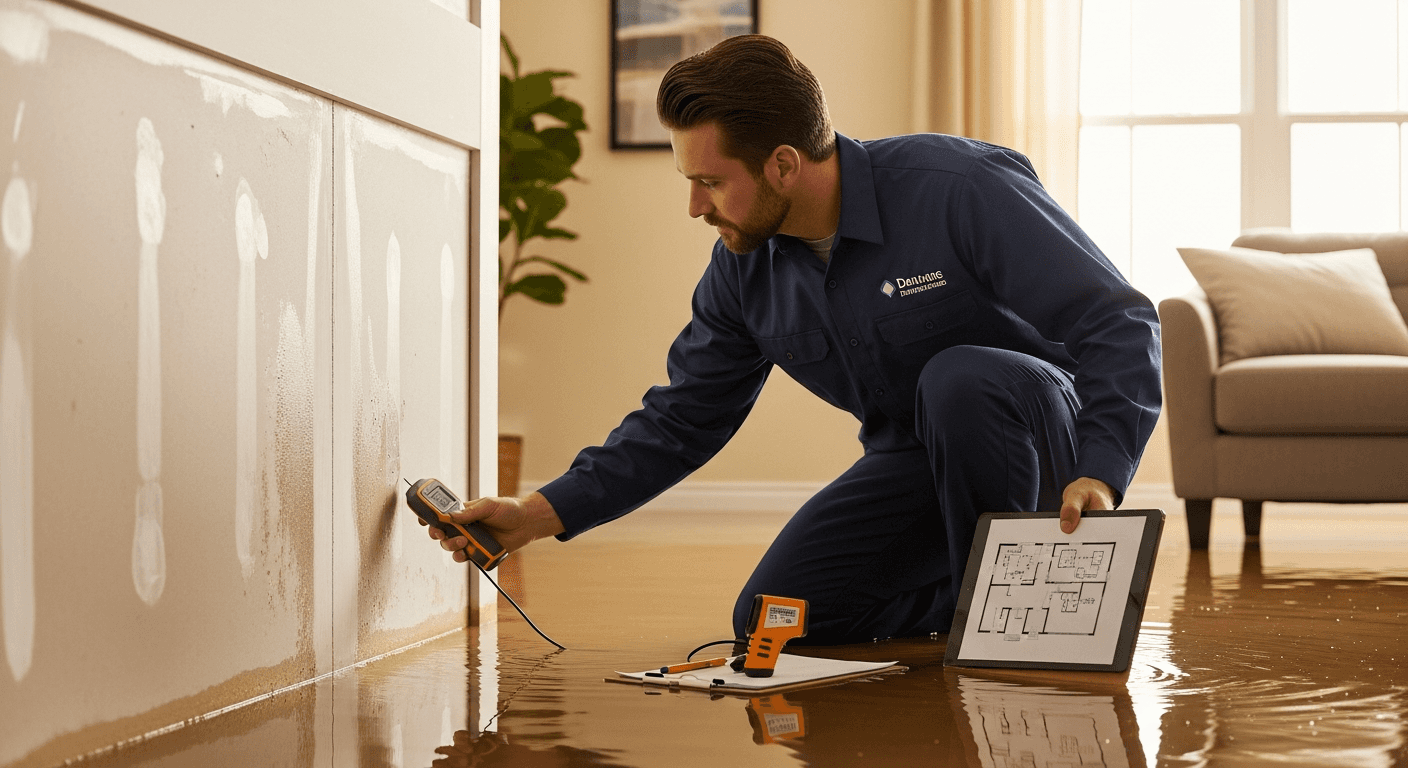
The water used to put out a fire creates a second problem on top of the first: saturated materials that, if ignored, lead to secondary water damage and create conditions where mold can begin to grow within 24 to 48 hours. How it's overcome: a capable restorer treats fire and water damage together — mapping moisture, deploying structural drying equipment, and taking steps to reduce the risk of mold while the fire cleanup proceeds. Handling both at once helps keep a fire loss from quietly turning into a mold loss.
A Note on Insurance
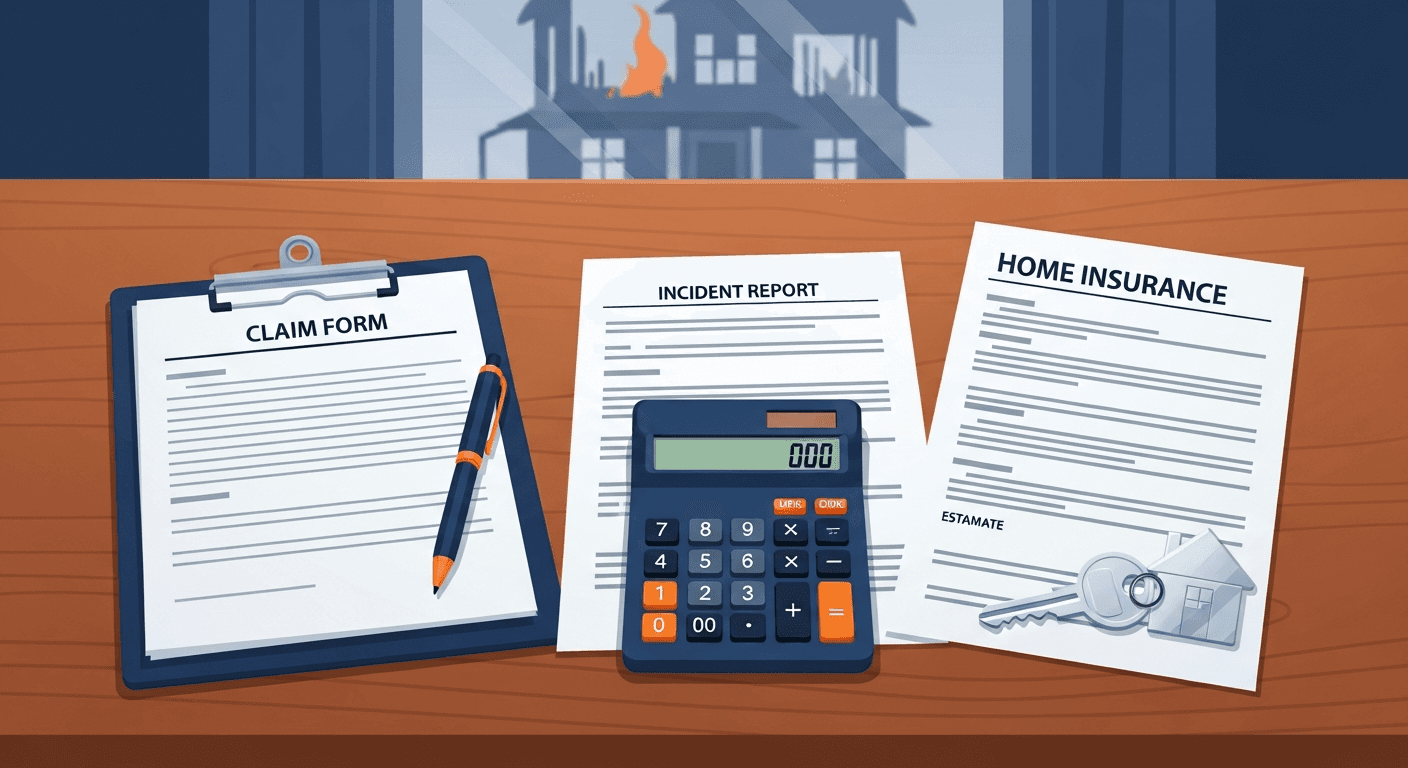
Navigating a fire claim is stressful. A good restoration company documents the loss thoroughly and works directly with your carrier throughout the process, so the scope, the contents inventory, and the restoration plan are all clearly supported. For more on the paperwork side, our fire damage insurance claim guide walks through what to expect.
How Bulldog Can Help
From the first board-up to the final coat of paint, Bulldog Cleaning & Restoration handles fire damage restoration as one continuous process — securing the property, protecting and cleaning your contents, removing soot and odor, and rebuilding to pre-loss condition. We serve Greater Philadelphia and South Jersey and respond 24/7. If you've had a fire, reach us through our contact page or call (267) 982-5504.