How Much Does Water Damage Restoration Cost? (2026 Guide)
Most water damage jobs vary in price based on what's affected. See what drives the price, what insurance covers, and how to save.

When water gets into your home, one of the first questions is: how much is this going to cost? The honest answer is that it depends on how much water there is, what kind of water it is, what it soaked into, and how quickly drying starts. This guide breaks down typical water damage restoration costs, what pushes the price up or down, and what homeowners insurance usually covers.
The Short Answer
According to national cost data from Fixr, most homeowners pay between $1,200 and $5,000 for water damage restoration, with a national average around $3,000. Priced by area, extraction and drying usually runs about $3.75 to $7.50 per square foot, depending on how contaminated the water is.
At the low end, a small clean-water spill caught right away can cost a few hundred dollars. At the high end, a sewage backup in a finished basement that requires removing drywall and flooring can reach tens of thousands. Most jobs land somewhere in between.
Cost by Type of Water
Restoration professionals sort water into three categories under the IICRC S500 standard. The dirtier the water, the more protective equipment, cleaning, and material removal the job needs, and the higher the cost per square foot.
| Water category | Common sources | Typical cost per sq ft* |
|---|---|---|
| Category 1 (clean) | Burst supply pipe, overflowing sink, broken ice-maker line | $3.75 – $4.25 |
| Category 2 (gray) | Washing machine or dishwasher discharge, toilet overflow with urine | $4.10 – $6.50 |
| Category 3 (black) | Sewage backup, outside floodwater, rising groundwater | $7.00 – $7.50 |
*Extraction and drying only, per Fixr (updated January 2025). Rebuilding is extra.
One thing many people don't realize: clean water doesn't stay clean. Water that sits for a day or two picks up contaminants from the materials it touches, and a Category 1 loss can become a Category 2 or 3 loss. That's one of the biggest reasons fast response saves money. Learn more in our guide to water categories, classes, and the science of structural drying, or see our sewage cleanup services for Category 3 situations.
Cost by How Much Got Wet (Damage Class)
The IICRC also sorts losses into four classes based on how much water was absorbed and how hard it will be to dry. Fixr's national figures:
- Class 1 ($150 – $400): A small area, mostly hard surfaces, little water soaked in.
- Class 2 ($500 – $1,000): A whole room, with carpet and the lower part of walls wet.
- Class 3 ($1,000 – $3,000): Water came from above, so ceilings, walls, insulation, and floors are all saturated.
- Class 4 ($20,000 – $100,000): Water soaked into dense materials like hardwood, plaster, brick, or concrete that need specialty drying.
Cost by Room
Where the water ends up matters too. Typical ranges from Fixr:
- Bathroom: $500 – $4,500
- Kitchen: $1,750 – $8,000 (cabinets, appliances, and flooring under them add up)
- Ceiling repair: $325 – $1,100
- Basement: $2,000 – $85,000 (finished basements with carpet, drywall, and stored belongings are the widest range of any room)
Finished basements are some of the most common water losses we see in Bucks County, Montgomery County, and Philadelphia, especially after heavy rain. See our guide on basement flooding after heavy rain and our flood damage restoration services.
Two Separate Bills: Mitigation and Rebuild
Water damage work usually happens in two phases, and it helps to understand both before you compare quotes:
- Mitigation (cleanup and drying): Emergency response, water extraction, removing materials that can't be saved, antimicrobial treatment, and running air movers and dehumidifiers until moisture readings hit their drying goal. The per-square-foot prices above cover this phase.
- Reconstruction (putting it back): New drywall, paint, trim, flooring, cabinets, and anything else that was removed. This is priced separately and depends on the finishes in your home.
Some companies only do the first phase and leave you to find a contractor for the second. Bulldog handles both, from water damage restoration through reconstruction, so one team is responsible for the whole project.
What Makes Water Damage Cost More (or Less)
1. How fast drying starts
This is the biggest factor you control. Drywall, baseboards, and cabinets that are dried quickly can often be saved. Wait too long and those same materials have to be cut out and replaced, which adds both mitigation and rebuild costs. The EPA recommends drying water-damaged areas within 24 to 48 hours to help prevent mold growth.
2. What the water soaked into
Tile and vinyl dry quickly. Carpet pad, insulation, particleboard cabinets, and laminate usually have to be removed. Hardwood floors and plaster walls can often be dried in place, but they take longer and need specialty equipment.
3. Water you can't see
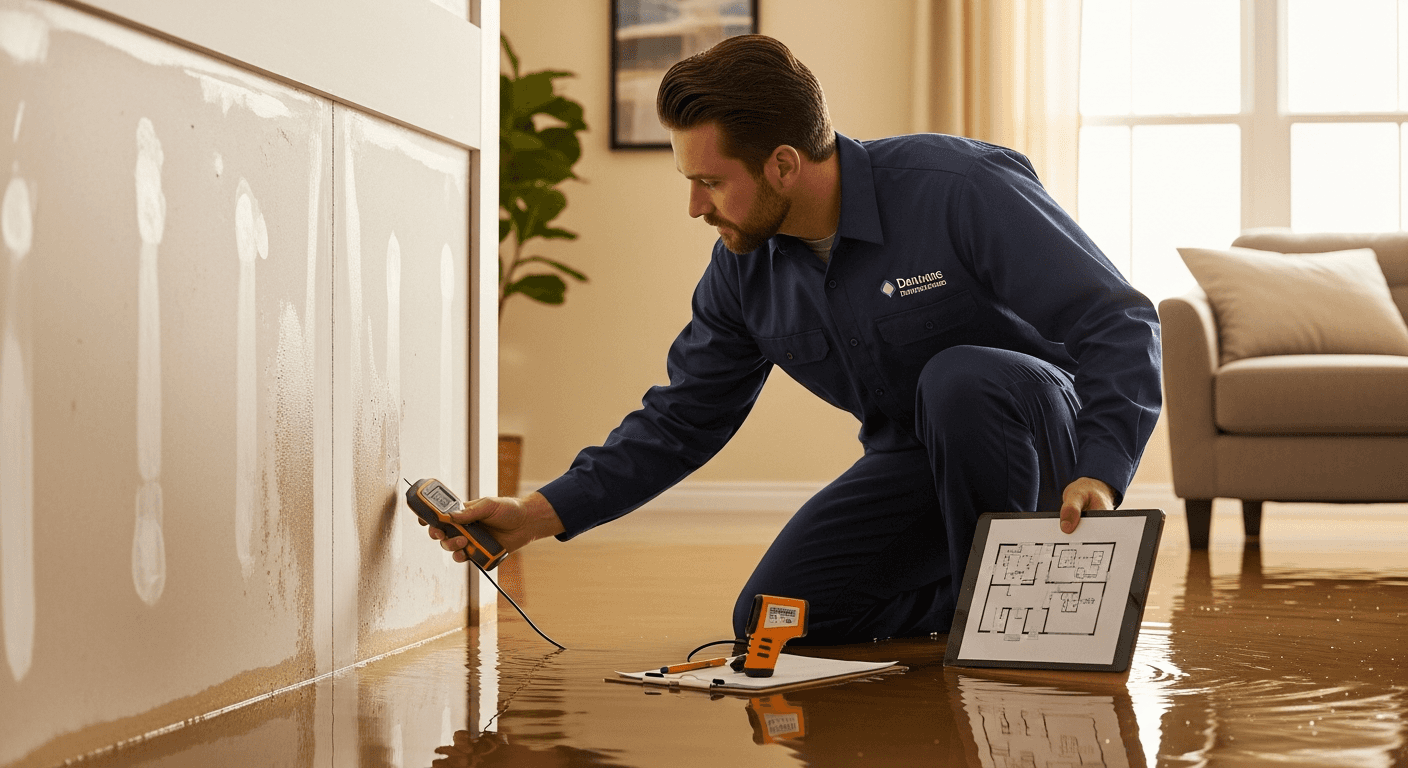
Water travels under flooring, up inside walls, and into neighboring rooms. A job that looks like one wet room can turn out to be three. Professionals use moisture meters and thermal cameras to find the full extent up front, which prevents surprise costs later. Here are the warning signs of hidden water damage.
4. Mold
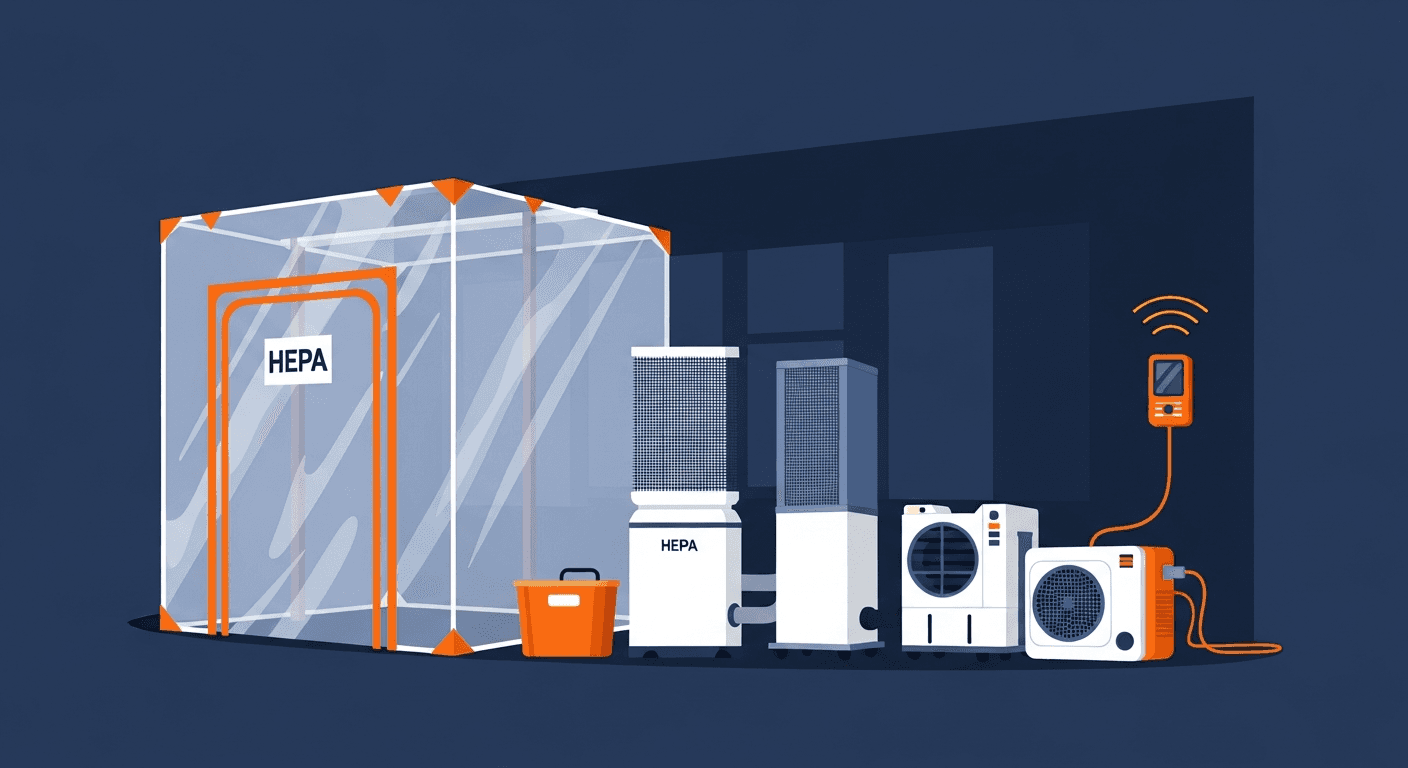
If water sat long enough for mold to grow, the job now includes mold remediation, with containment, HEPA air filtration, and clearance testing. That adds real cost, and it's often avoidable with a fast response. See our full breakdown of mold remediation costs.
5. Belongings
Moving, cleaning, drying, and storing furniture and personal items (called contents work) is priced separately from the structure.
Does Homeowners Insurance Cover Water Damage?
Often, yes, if the water damage was sudden and accidental. A burst pipe, a failed water heater, or a washing machine hose that splits are typically covered. What usually isn't covered:
- Damage from a slow leak that went on for weeks or months
- Outside floodwater, unless you have separate flood insurance
- Sewer or drain backups, unless your policy includes a backup endorsement
- The repair of the failed pipe or appliance itself (the policy pays for the damage it caused)
Every policy is different, so read yours or call your agent. If your claim is covered, your out-of-pocket cost is usually your deductible. Good documentation matters: photos, moisture readings, and drying logs show the adjuster exactly what happened and what was needed. Here's how we document water damage for insurance claims, and we work directly with adjusters so you're not stuck in the middle.
How to Keep Water Damage Costs Down
- Stop the water first. Shut off the main valve. Our step-by-step guide covers what to do immediately after a pipe burst.
- Call right away, not the next morning. Every hour water sits, it soaks deeper.
- Take photos and video before anything is moved or thrown out.
- Don't tear out materials yourself. Removing drywall or flooring that could have been dried can cost you more and complicate your claim.
- Keep the drying equipment running. Turning off air movers or dehumidifiers to cut noise adds days to the job.
Why the Cheapest Quote Can Cost More
A low price that skips moisture mapping, daily readings, or antimicrobial treatment can leave water trapped behind walls and under floors. That often shows up months later as mold, odor, warped flooring, or peeling paint, and by then insurance may treat it as a new, gradual problem. When comparing quotes, ask each company how they'll prove the structure is dry before anything is closed up.
Frequently Asked Questions
Is water damage restoration priced by the square foot?
Partly. Cost guides quote per-square-foot prices to give a ballpark, but real estimates are itemized: equipment per day, materials removed, labor, cleaning, and antimicrobial treatment. Insurance claims are typically written this way too.
Is it cheaper to clean up water damage myself?
For a small spill on a hard floor that you dry within a day, yes. For anything that soaked into carpet, drywall, or a ceiling, DIY often costs more in the end, because a box fan can't dry the inside of a wall and hidden moisture leads to mold.
How long does water damage restoration take?
Drying commonly takes several days, and repairs can take days to weeks after that. See our full water damage cleanup timeline.
Get an Honest Look at Your Water Damage
Every home is different, and the only way to know what your water damage will cost is to have it measured. Bulldog Cleaning & Restoration is IICRC certified and responds 24/7 across Bucks County, Montgomery County, Philadelphia, and South Jersey. Call us in Pennsylvania at (267) 982-5504, in New Jersey at (609) 952-0142, or request service online.
Cost figures are national ranges from Fixr's water damage restoration cost guide (updated January 2025). Your price depends on your property, the type of water, and how far it spread.