Categories and Classes of Water Damage — and the Science of Structural Drying
Restorers classify every water loss by category and class, then dry it using real physics. Here's how vapor pressure, psychrometrics, and moisture meters come together to dry a structure correctly — and why it's a job for professionals.
Not All Water Damage Is the Same
When water gets into a building, restoration professionals don't treat every loss identically. The industry standard — the IICRC S500 — classifies water damage two ways: by its category (how contaminated the water is) and its class (how much water is present and how hard it will be to dry). Understanding both is the foundation of a safe, effective drying plan.
The Three Categories of Water
Category describes the level of contamination, which drives safety precautions and what can be salvaged.
- Category 1 — Clean water: from a sanitary source such as a broken supply line or an overflowing sink with no contaminants. It poses little immediate health risk, but it doesn't stay clean forever.
- Category 2 — Gray water: contains significant contamination and can cause discomfort or illness on contact, such as discharge from a dishwasher or washing machine, or overflow carrying some contamination.
- Category 3 — Black water: grossly contaminated, such as sewage backups or flooding from rivers and streams. This water can carry harmful bacteria and requires strict containment and disposal protocols.
An important detail: category can deteriorate over time. Clean water left sitting in a warm building can degrade to Category 2 or 3 as it picks up contaminants and bacteria multiply. This is one of many reasons speed matters. For heavily contaminated losses, see our sewage damage cleanup page.
The Four Classes of Water
Class describes the amount of water and the evaporation load — essentially, how big the drying job is.
- Class 1: the least amount of water, affecting part of a room with materials that absorb little moisture.
- Class 2: a larger volume, with water wicking up walls and saturating carpet and cushion across an entire room.
- Class 3: the greatest volume, often coming from overhead and saturating ceilings, walls, insulation, and floors.
- Class 4: specialty drying situations, where water has saturated low-permeance materials like hardwood, plaster, concrete, and stone that release moisture very slowly.
The class tells the technician how much drying equipment is needed and which techniques the job will require.
The Science of Structural Drying
Drying a building isn't about "blowing air around until things feel dry." It's applied physics. Water always moves from wet toward dry, and moisture in the air moves from areas of high vapor pressure to areas of low vapor pressure. Effective structural drying works by managing that gradient on purpose.
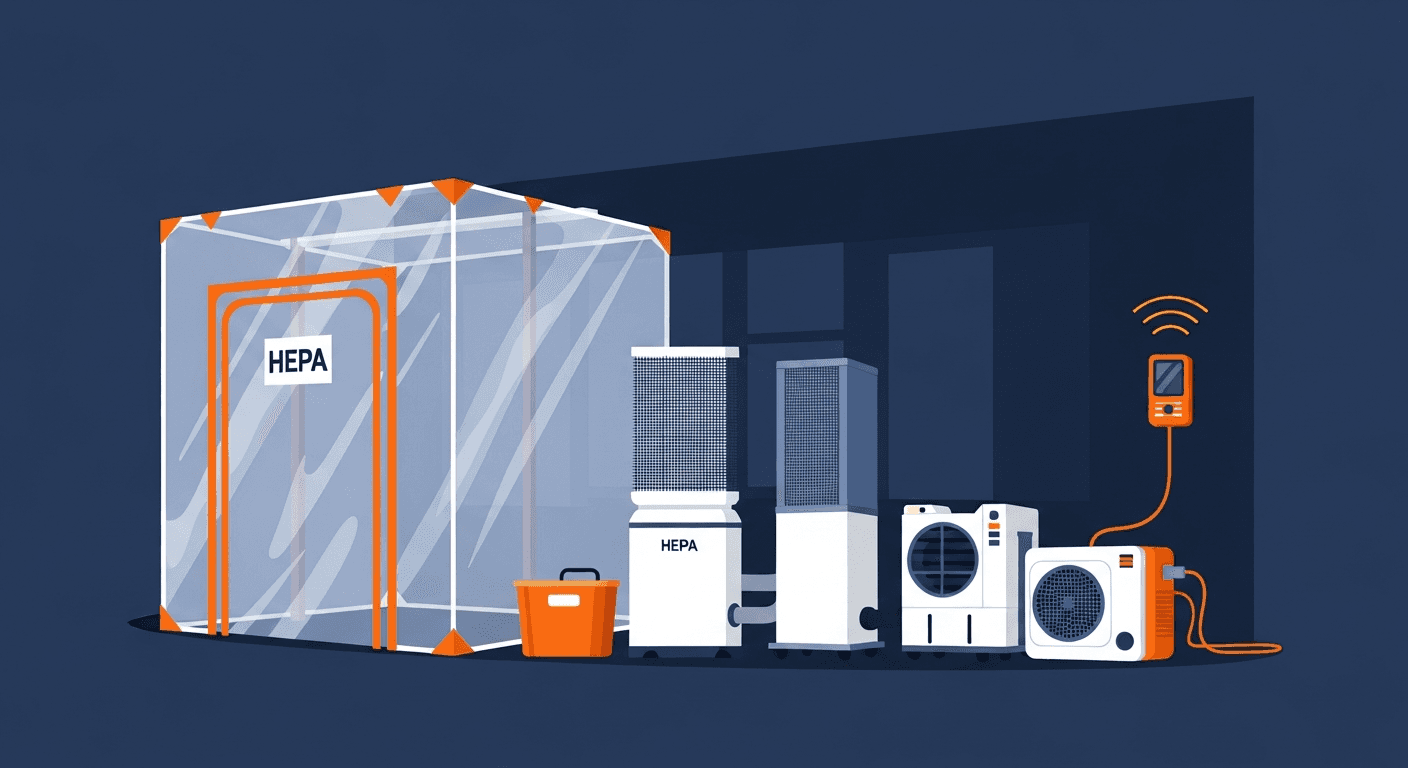
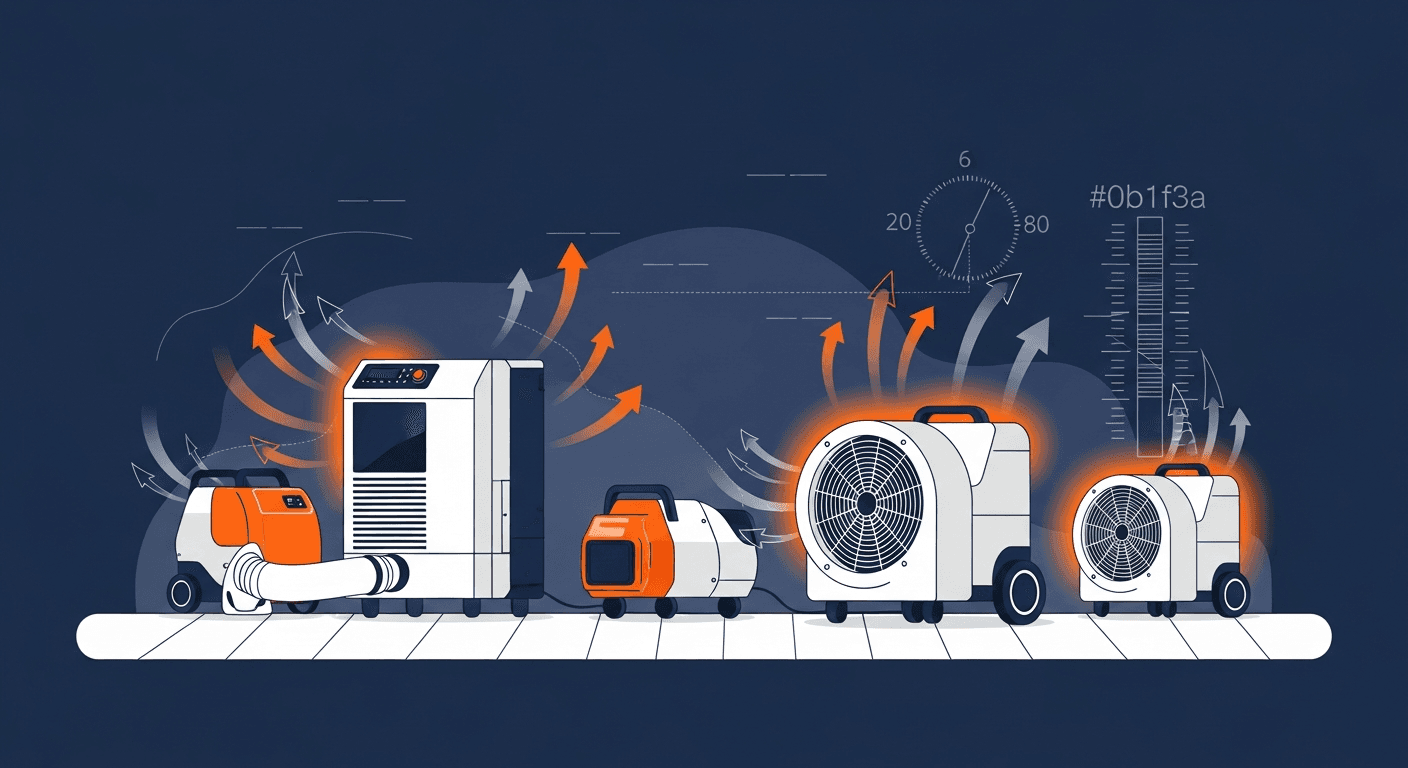
Technicians use heat to gently raise the vapor pressure inside wet materials, encouraging moisture to leave the material and enter the air. At the same time, dehumidifiers lower the vapor pressure of the surrounding air by pulling that moisture out. The bigger the difference between the wet material and the dry air around it, the faster water evaporates and is carried away. Air movers keep a constant flow of dry air across wet surfaces so the humid boundary layer doesn't just sit there and stall the process.
Managing Psychrometrics
Psychrometrics is the study of how temperature, humidity, and the moisture content of air relate to one another — and it's what separates guesswork from a controlled drying chamber. Restorers track readings like temperature, relative humidity, dew point, and grains of moisture per pound of air to understand exactly what the environment is doing. By balancing three levers — air movement, dehumidification, and temperature — they create and maintain conditions where materials give up moisture quickly without causing secondary problems like warping or condensation elsewhere in the building.
Different tools suit different conditions: refrigerant and low-grain refrigerant (LGR) dehumidifiers excel in many environments, while desiccant dehumidifiers handle low-temperature or deep-drying scenarios. Choosing and positioning equipment correctly is the difference between a structure that dries in days and one that quietly stays wet behind the walls.
Finding Hidden Moisture: Thermal Imaging and Moisture Meters
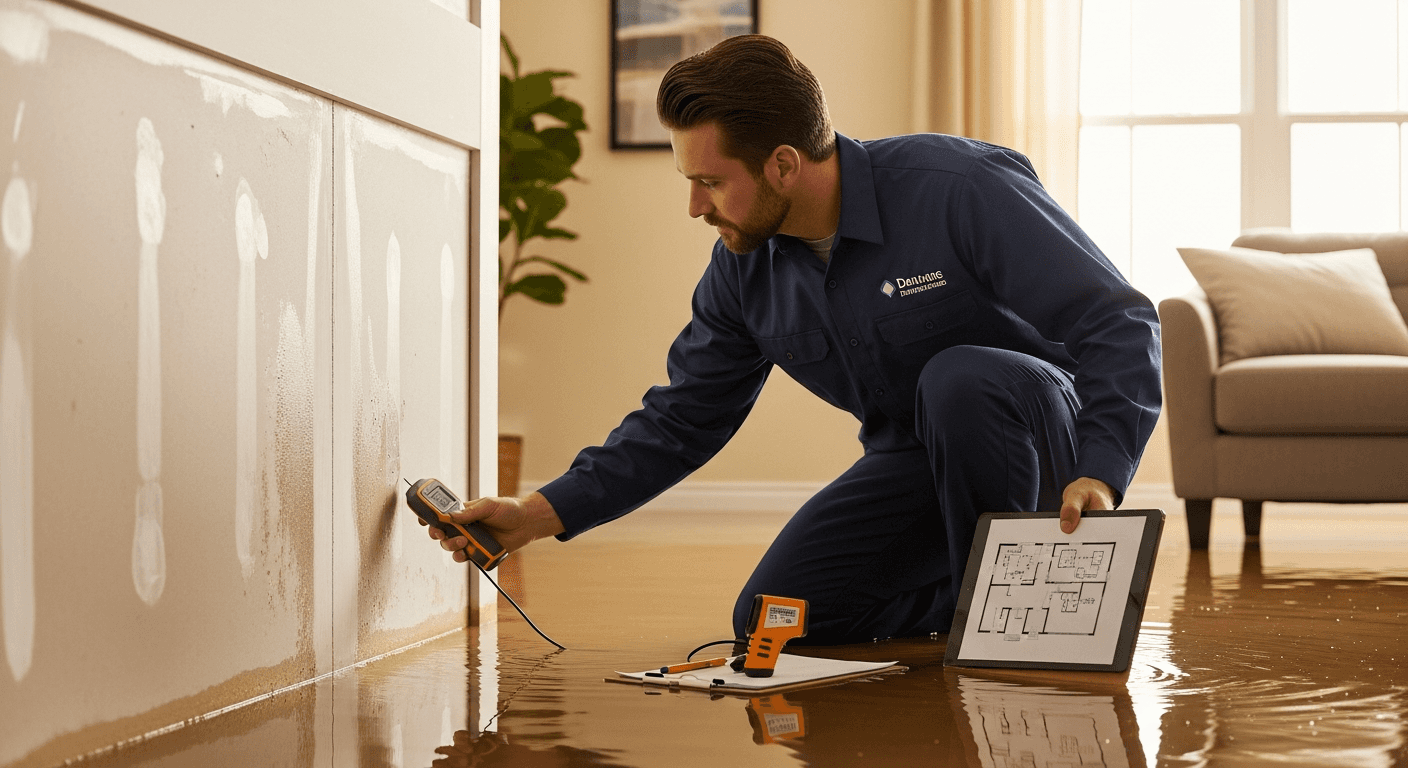
The most dangerous water is the water you can't see. Moisture migrates into wall cavities, under flooring, and through subfloors, where it can fuel rot and mold long after the surface feels dry. Professionals use two key tools to find it:
- Thermal imaging cameras reveal temperature differences across surfaces. Evaporating moisture tends to read cooler, so a thermal camera can flag suspicious areas hidden behind drywall — pointing the technician toward spots that need a closer look.
- Moisture meters then confirm and quantify it. Non-penetrating meters scan beneath the surface without damage, while pin-type meters measure the actual moisture content of a material. Thermo-hygrometers track the air conditions in each space.
Together, these instruments let a restorer map the true extent of a loss, set measurable drying goals, and verify the structure is genuinely dry — not just dry to the touch. Our article on the warning signs of hidden water damage covers what homeowners can watch for between professional visits.
Why Call a Restoration Company
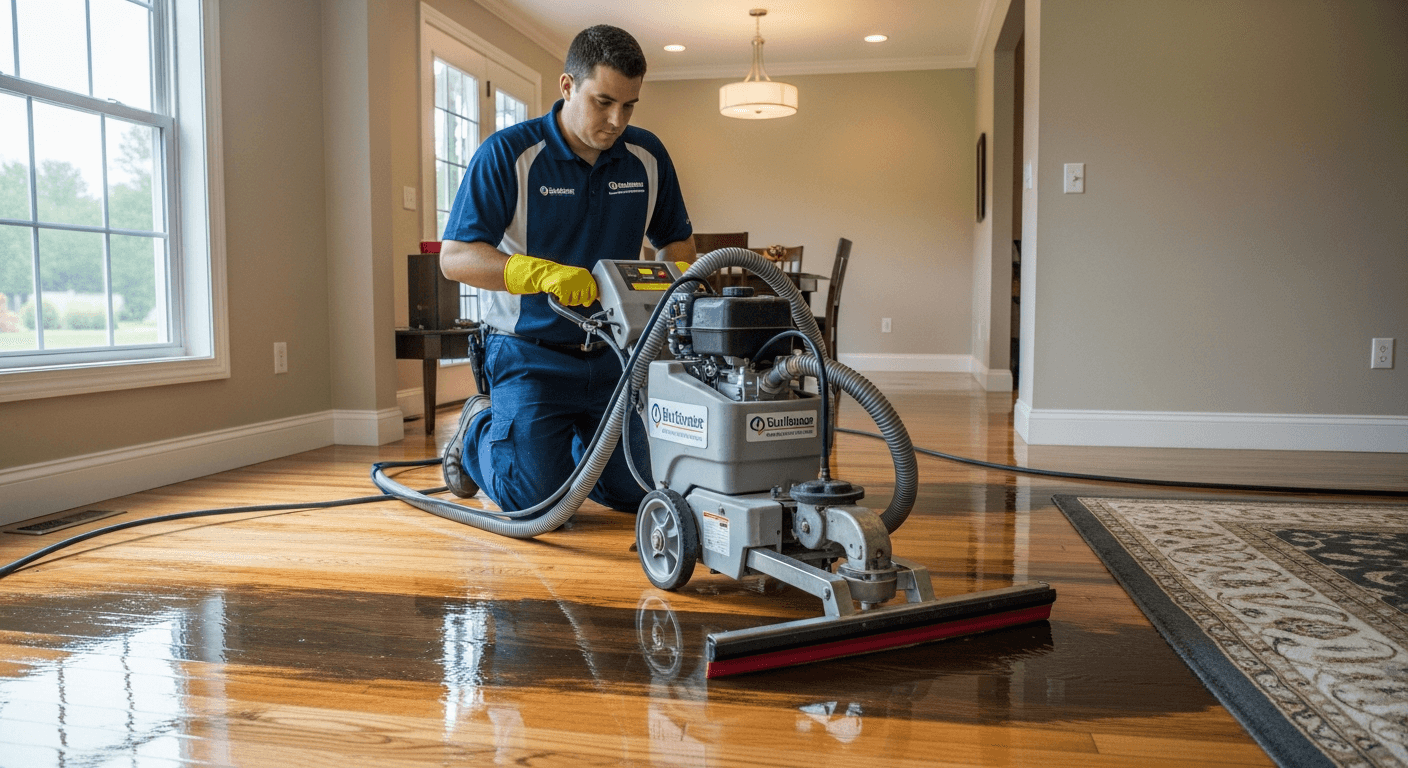
Household fans and a shop vacuum can't reproduce a controlled drying environment, and they can't measure whether moisture remains deep in the structure. A professional water damage restoration team brings calibrated instruments, commercial-grade air movers and dehumidifiers, and IICRC-aligned procedures — plus documentation that supports your insurance claim. Drying the structure correctly and quickly also helps prevent secondary damage, including the mold growth that can begin within 24 to 48 hours when materials stay wet. If your loss involves significant flooding, our flood damage restoration service is built for exactly this.
How Bulldog Can Help
Bulldog Cleaning & Restoration applies this science on every job across Greater Philadelphia and South Jersey, from the first moisture reading to the final verification that your structure is dry. If you're dealing with water damage and want it handled correctly the first time, reach out through our contact page or call (267) 982-5504 for 24/7 emergency response. Not sure where to start? Our step-by-step guide on what to do after water damage is a good companion to this one.