Commercial Mold Testing: Why Property Owners Need a Professional Remediation Company
Commercial mold isn't a DIY problem. Learn why Bucks County and Philadelphia property owners need IICRC-certified mold testing — and how a professional remediation company prevents tenant lawsuits, insurance denials, and costly recurrences.
Why Commercial Mold Testing Demands a Different Playbook
Mold in a commercial property isn't just an aesthetic problem — it's a liability event waiting to happen. Unlike residential mold, where the affected parties are typically a single family, commercial mold exposes property owners to OSHA compliance scrutiny, tenant lawsuits, lost rental income, employee health claims, and insurance coverage disputes. The stakes are exponentially higher, and the testing protocol has to match.
A DIY mold test kit from a hardware store can tell you mold exists. It can't tell you what species, how it's spreading, where it's hiding, or whether your HVAC system is silently distributing spores across an entire building. Only a professional commercial mold inspection can do that — and only an IICRC Certified mold remediation company can act on the findings without exposing you to additional legal risk.
If you manage a commercial property in Bucks, Montgomery, Philadelphia, or surrounding counties, here's what every owner, facility manager, and property manager needs to know about commercial mold testing — and why bringing in Bulldog Cleaning & Restoration at the testing phase (not after the problem has spiraled) is the single best decision you can make.
The Hidden Complexity of Commercial Mold
Commercial buildings are mold-amplification machines when conditions go wrong. Consider what makes them uniquely vulnerable:
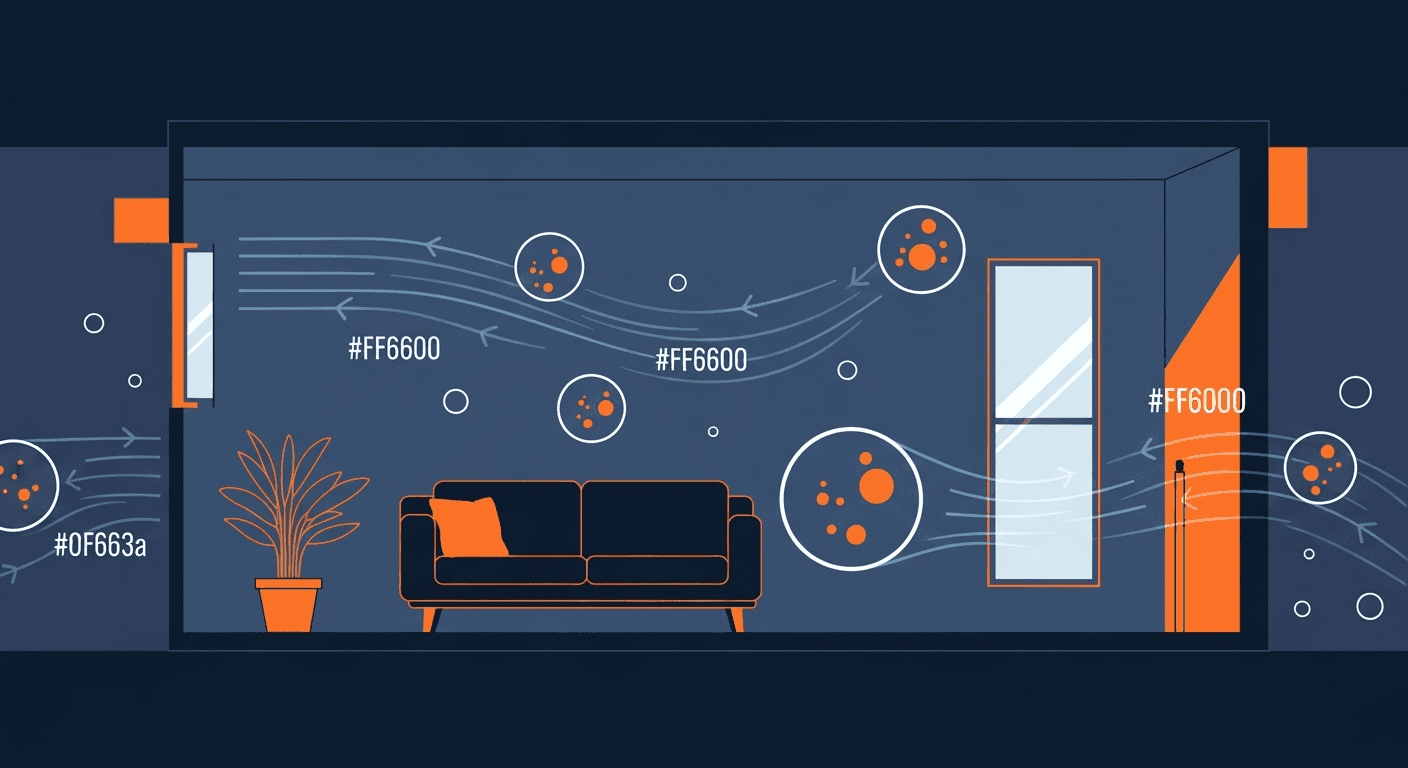
- HVAC systems that recirculate air across thousands of square feet — a single contaminated air handler can distribute spores throughout the entire structure within hours
- Multi-tenant occupancy with conflicting moisture practices (one tenant runs humidifiers, another doesn't ventilate properly)
- Hidden chase walls and utility cavities that conceal slow leaks for months or years
- Drop ceilings and raised floors that trap moisture and create ideal mold habitats out of sight
- Industrial-scale roofing where a single failed seam can saturate insulation across an entire wing
- Compliance obligations — health departments, OSHA, and ASHRAE all have overlapping standards
A residential inspector trained on single-family homes is fundamentally not equipped to navigate this. Commercial mold testing requires inspectors who understand building science, HVAC airflow dynamics, indoor air quality (IAQ) standards, and the legal frameworks that apply to occupied workplaces.
What Professional Commercial Mold Testing Actually Includes
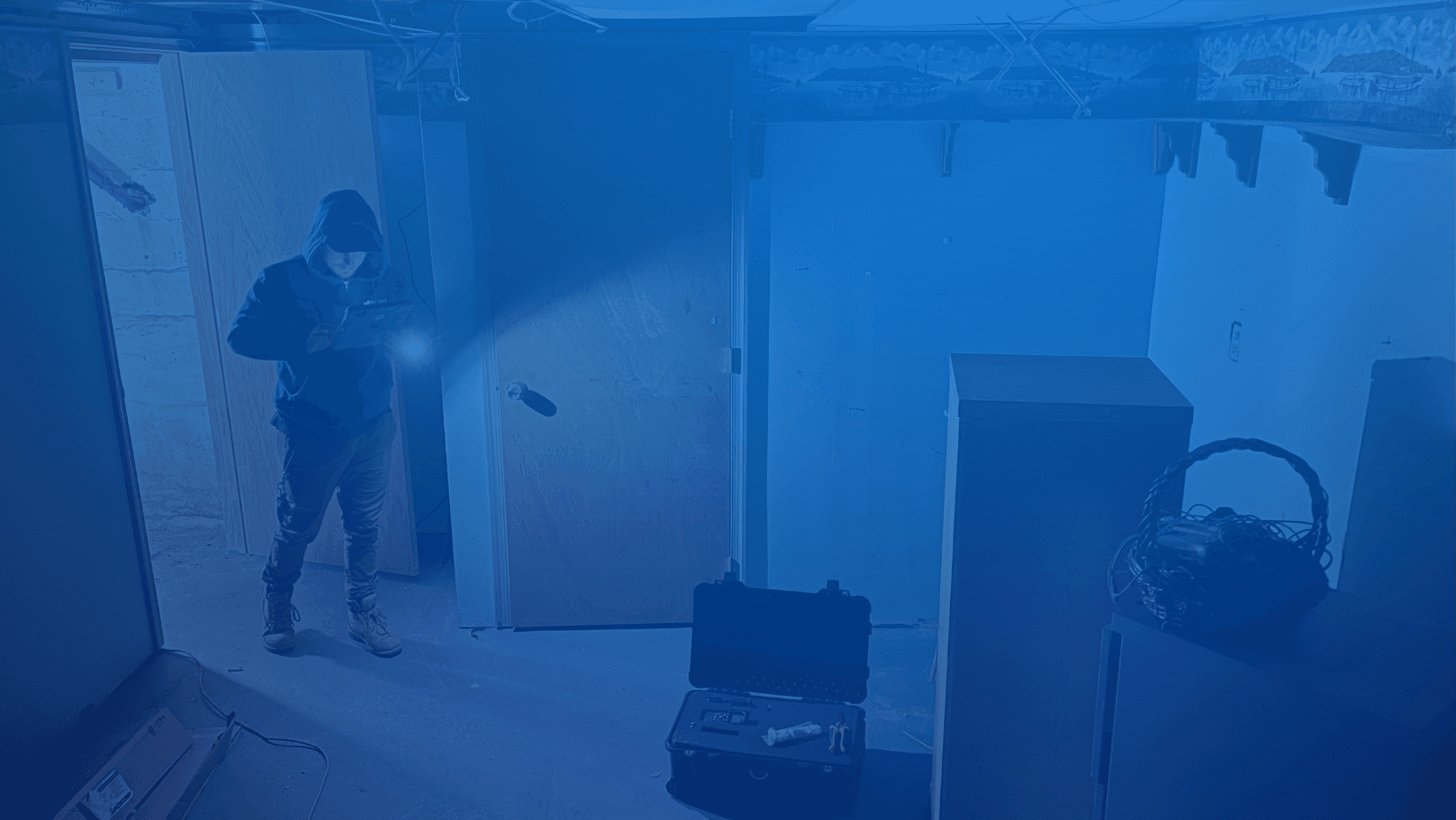
When Bulldog Restoration performs a commercial mold inspection, the protocol goes far beyond a visual walkthrough. Our certified mold testing process includes:
1. Comprehensive Visual & Moisture Survey
Every accessible area inspected with thermal imaging cameras and calibrated moisture meters. We document elevated moisture readings in walls, floors, ceilings, HVAC plenums, and under-fixture cavities. Thermal anomalies often reveal hidden water intrusion long before visible mold appears.
2. Air Sampling (Indoor + Outdoor Baseline)
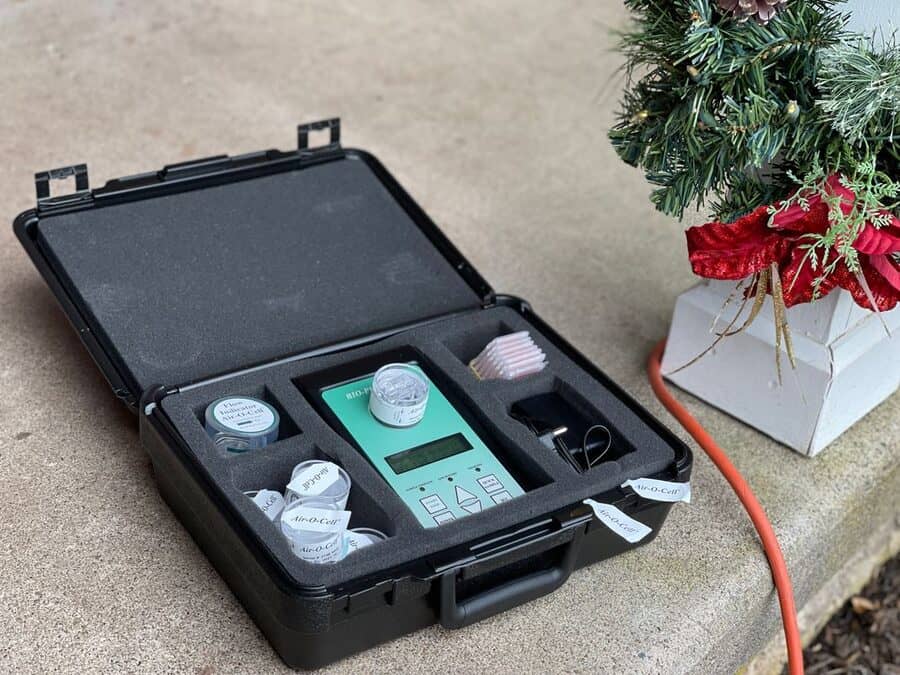
Spore-trap air samples taken from suspect zones AND from outdoor reference points. The comparison is what makes the data legally defensible — without an outdoor baseline, you can't prove an indoor mold population is elevated. We sample HVAC return-air streams separately to identify systemic contamination.
3. Surface & Bulk Sampling
Tape lifts, swab samples, and bulk material samples sent to AIHA-accredited laboratories for species-level identification. This matters because Stachybotrys chartarum (toxic black mold), Aspergillus, Penicillium, and Cladosporium each require different containment, remediation, and clearance protocols.
4. HVAC System Assessment
Inspection of air handlers, ductwork, drain pans, and condensate lines. A surprising percentage of "mystery mold" cases trace back to a clogged condensate line or contaminated cooling coil that's been quietly seeding spores into every conditioned space in the building.
5. Written Report with Lab Documentation
A bound report including all photographs, moisture readings, lab results, scope of contamination, recommended remediation protocol, and post-remediation clearance criteria. This is the document that holds up in insurance claims, tenant disputes, real estate transactions, and litigation.
The Complications That Trip Up Property Owners — And How a Pro Solves Them
Here's where commercial mold gets serious. These are the real-world complications we see Bucks County and Philadelphia property owners face when they don't engage a professional from day one:
Complication #1: Tenant Notification and Liability Exposure
The trap: Owners often delay notifying tenants of suspected mold, hoping to "investigate quietly." This creates massive legal exposure under Pennsylvania landlord-tenant law and can void insurance coverage.
How a professional solves it: Bulldog Restoration provides documented inspection findings and a formal scope of work that you can share with tenants, demonstrating good-faith remediation. We've worked alongside property managers throughout Greater Philadelphia to navigate this exact scenario without escalation.
Complication #2: Insurance Claim Denial
The trap: Insurance carriers routinely deny mold claims when there's no professional documentation, no clear water-event causation, or no third-party lab analysis.
How a professional solves it: Our reports include all the documentation insurance adjusters require — including water-event timeline, moisture mapping, lab-verified species, and remediation protocols aligned with IICRC S520 standards. We also provide expert witness services for disputed claims.
Complication #3: Cross-Contamination During Remediation
The trap: Untrained crews opening up moldy drywall without proper containment can spread spores throughout the entire building, turning a contained problem into a building-wide remediation.
How a professional solves it: Full HEPA negative-air containment, decontamination chambers, PPE protocols, and post-remediation air clearance testing. Our IICRC certified team follows S520 standards on every commercial project.
Complication #4: Failed Post-Remediation Verification
The trap: Remediation looks complete, but follow-up clearance testing fails — meaning the building cannot be reoccupied and the entire process has to be redone.
How a professional solves it: We design the remediation scope around achievable clearance criteria from day one. Pre-test, remediate to standard, post-test, and document — every time.
Complication #5: Recurrence
The trap: Mold gets removed, but the underlying moisture source isn't addressed. Six months later, it's back, and now insurance treats it as a separate (uncovered) event.
How a professional solves it: Our protocol always identifies and documents the root moisture source. If reconstruction is needed, Bulldog's reconstruction division handles it in-house — meaning one accountable contractor from inspection through final repair.
Why "Professional Remediation Company" ≠ "Restoration Generalist"
Not every restoration company is qualified to handle commercial mold. Here's what to verify before hiring:
- IICRC AMRT certification (Applied Microbial Remediation Technician) — not just generic IICRC
- Direct insurance billing experience with major commercial carriers
- References from comparable commercial properties (offices, multi-family, healthcare, hospitality, retail)
- In-house reconstruction capability — so you're not hiring three separate contractors
- 24/7 emergency response — water events that lead to mold don't happen 9-to-5
- AIHA-accredited lab partnerships for legally defensible sampling
Bulldog Cleaning & Restoration meets all of the above. We've handled commercial mold projects across property management portfolios, hospitality, healthcare, education, manufacturing, and retail throughout the Greater Philadelphia region.
When to Schedule a Commercial Mold Inspection
Don't wait for visible mold growth. Schedule a professional inspection when:
- A water event (pipe burst, roof leak, HVAC failure, fire suppression discharge) has occurred — even if you "dried it up"
- Tenants or employees report respiratory symptoms, headaches, or persistent musty odors
- You're conducting commercial real estate due diligence (purchase, refinance, lease renewal)
- Building permits or insurance underwriting requires IAQ documentation
- A previous remediation needs clearance verification before reoccupation
Early professional testing nearly always costs less than reactive remediation after contamination has spread. We've seen $5,000 inspections prevent $250,000 building-wide remediations.
What Happens Next
If you suspect commercial mold — or just want a baseline assessment of your property's IAQ — Bulldog Restoration provides no-obligation initial consultations for Greater Philadelphia commercial properties. Our certified inspectors can be on-site within 60 minutes for emergencies, or scheduled at your convenience for non-urgent assessments.
We also offer:
- Mold expert witness services for litigation, insurance disputes, and real estate matters
- Full commercial restoration services including water, fire, and storm damage
- Industry-specific protocols for property management, hospitality, healthcare, education, manufacturing, and retail
- Reconstruction and rebuild services when remediation requires structural repair
Call (267) 982-5504 in Pennsylvania or (609) 952-0142 in New Jersey, or request a consultation online. Available 24/7 — day or night.
Bulldog Cleaning & Restoration is an IICRC-certified disaster restoration company serving Bucks County, Montgomery County, Philadelphia, and the surrounding Greater Philadelphia region with commercial and residential mold testing, remediation, water damage restoration, fire damage restoration, storm damage repair, and reconstruction services since our founding. We document everything to insurance standards.